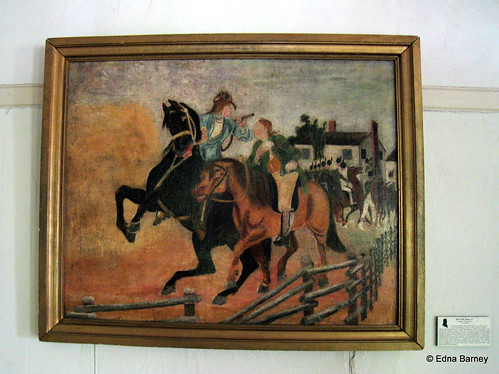
From my genealogical research, so far, I have discovered that my Virginia-born mother was descended from twenty-nine American patriots who assisted in the making of America. The following are my mother’s known ancestors who risked their lives and fortunes. May their names live for evermore.
☆★☆✶***✫**✶**✫***☆★☆
Nathaniel Clarke was certified for a public service claim in Amherst County, Virginia. He is also recorded in the Amherst County Register of Revolutionary War soliders.
☆★☆✶***✫**✶**✫***☆★☆
☆★ At a court held at Fluvanna County, Virginia on Tuesday, 9 April 1782, George Cox was certified by Thomas Napier for a public service claim of 240 pounds of beef, dated 28 November 1781.
☆★☆✶***✫**✶**✫***☆★☆
☆★ On 1 June 1779, Thomas Craig, along with Thomas Jefferson, was one of the signatories to the Albemarle Declaration of Independence. The original copy is preserved at The Virginia Historical Society in Richmond. Thomas Craig was compensated for three Public Service Claims in Albemarle County, Virginia during the Revolution; one for 270 pounds of beef for State use, the second for 2 1/4 gallons whiskey and the third for 222 pounds of beef for Continental use. See Albemarle County Patriots.
☆★☆✶***✫**✶**✫***☆★☆
John Doland was called into service to the Revolutionary cause at the age of 18 or 19. He served as a Private in the Virginia Line and received a Land Warrant in 1785, for 200 acres of Kentucky Land. He was pensioned in 1832, and having bounty land warrants of l60 acres in 1855, issued 26 May 1856.
☆★☆✶***✫**✶**✫***☆★☆
☆★ Leonard Drumheller was drafted into the Virginia Line in January 1781, at the age of 17, as a fifer and marched from Albemarle County, Virginia to Richmond where he drew arms and thence went to Williamsburg. From Williamsburg he was marched to the halfway house between York and Hampton where he was stationed for a time before returning to Williamsburg and Richmond. There he was discharged in March 1781, and he returned home. In May 1781, Leonard was drafted into the militia and again marched from Albemarle County, this time under Captain Marsh Leake in General Lafayette’s army as a Private. He was discharged July 1781. Soon afterwards he was detached in the minute service and was there until after the surrender of British General Cornwallis and peace was declared, between 1 August 1781, and late October. He applied for a Revolutionary War Pension from Albemarle County on 12 October 1832.
☆★☆✶***✫**✶**✫***☆★☆
★ During the Revolutionary War, Anne Graves furnished 175 pounds of beef to the Continental Troops, dated November 1781, Spotsylvania County, Virginia.
☆★☆✶***✫**✶**✫***☆★☆
Peter Hackett lived in Buckingham County, Virginia. During the American Revolution he served with the 9th Continental Line as a Sergeant Major.
☆★☆✶***✫**✶**✫***☆★☆
Colonel Burr Harrison attended The Third Virginia Convention at Henrico Parish Church in Richmond, Virginia on 17 July 1775, to organize troops and the war effort in order to defend the colony against invasion. The Convention acknowledged the debt to Patrick Henry whose wisdom had already begun the arming of the colony. In August 1775, he sent a letter from the convention to his son-in-law, Leven Powell, which is preserved in Leven Powell’s papers at the Library of Congress.
☆★☆✶***✫**✶**✫***☆★☆
☆★ Nehemiah Hundley served as a soldier in Virginia and Pennsylvania. As a very young man he was impressed to convey a package from Prince Edward County, Virginia to Fort Pitt in Pennsylvania during the Revolutionary War. While there, in 1779, he enlisted in the service of General McIntosh’s 13th Virginia Regiment serving under Lieutenant William R. Withers. He was wounded in the arm and was discharged as an invalid at Pittsburgh, Pennsylvania. His military service is recorded in pension records in Virginia and in the Pennsylvania Archives.
☆★☆✶***✫**✶**✫***☆★☆
☆★ On 1 November 1776, John Jameson of Albemarle County, Virginia signed a petition against the Church of England. His signature was next to the names of his neighbors Thomas Wharry, Samuel Jameson, Thomas Craig, John Craig, Thomas Jameson, Micajah Via, John McCord, Sam’l McCord, Wiliam Wood, and William Jameson, Jr. The petition was titled “Dissenters from the Church of England of Albemarle and Amherst Counties” and is referenced in “Virginia Historical Magazine”, volume 18, 1910, page 263. See Albemarle County Patriots.
☆★☆✶***✫**✶**✫***☆★☆
★ George Naylor enlisted on 4 July 1776, and his name is on the Muster Roll of Maryland Troops in the American Revolution. He served as a Private among the troops raised by Ensign Alex Trueman, for Captain Magruder’s Company in Prince George’s County, Maryland. As George Naylor, son of Batson Naylor, he is recorded on “A roll of the Guard kept at Magruder’s Warehouse that were from Captain Benjamin Wailes’s Company of Militia of the Lower Battalion”, in Revolutionary Papers recorded at Prince George’s County, 27 May 1782. George Naylor, the son of Batson, also signed the Oath of Fidelity in said county where he was recorded on Fielder Bowie’s Return of 30 March 1778.
☆★☆✶***✫**✶**✫***☆★☆
☆★ In the year 1779, George Norvell swore the Oath of Allegiance to the American Revolution in Albemarle County, Virginia, recorded in the Goochland County Order Book 12, page 503. On 21 June of that same year, he was a signatory to the Albemarle Declaration of Independence, along with Thomas Jefferson and other prominent citizens, the original document preserved at the Virginia Historical Society, Richmond.
☆★☆✶***✫**✶**✫***☆★☆
★ On 9 October 1777, in Goochland County, Virginia, James Norvell signed the Oath or Affirmation of Allegiance and Fidelity. In 1782, he supplied 25 bushels of corn to the patriot cause for the Continental Army in Goochland County.
☆★☆✶***✫**✶**✫***☆★☆
★Littleberry Patteson served as a sergeant during the Revolution in the company of Captain Samuel Jordan Cabell, 6th Virginia Battalion of the Continental Forces, from April to July 1777. He also served in Morgan’s Rifle Regiment.
☆★☆✶***✫**✶**✫***☆★☆
★Obediah Patterson provided diets and forage for two beefs to the Revolutionary cause in Bedford County, Virginia.
☆★☆✶***✫**✶**✫***☆★☆
On 20 September 1784, Ensign George PEYTON received bounty land from Virginia for three years service during the American Revolution. George Payton (Peyton) provided supplies to the Revolutionary cause in Culpeper County, Virginia.
☆★☆✶***✫**✶**✫***☆★☆
John Peyton was certified for a public service claim in Culpeper County, Virginia.
☆★☆✶***✫**✶**✫***☆★☆
Mrs. Seth Peyton furnished one beef to the Revolutionary cause in Prince William County, Virginia about 1779 to 1781.
☆★☆✶***✫**✶**✫***☆★☆
☆★ On 2 August 1777, Abram Poore signed the Goochland County, Virginia Oath of Allegiance, his name being number 18 on the list of W. Harrison, from the Ann Waller Reddy Collection, box B, file 2, FC, “List of Oaths of Allegiance”, at the DAR Library. Abraham Poor contributed 4 bushels of wheat and carriage to the Revolutionary cause, from Virginia Publick Claims, page 5, Goochland County, Virginia List I, 1780-1781. He provided 1 peck of cornmeal, 76 pounds of pork, 72 pounds of bacon, 1 pound of salt, 1 large bullock and 275 pounds of beef for Continental and State use, recorded in Goochland County, Virginia Court Booklet dated 19 March 1782. He again gave 250 pounds of beef and one gun for State use.
☆★☆✶***✫**✶**✫***☆★☆
☆★ On 16 August 1777, John Poor and his brother Robert signed the Oath of Fidelity in Goochland County, Virginia. He was drafted during the Revolution and served as a Private in the Virginia Line of the Continental Army for a term of twenty months. In his pension application, S38314, he stated “he was drafted as a private soldier of the war of the revolution on the continental establishment the twentieth day of March 1781 in the county of Albemarle and marched from thence to Chesterfield Court-house where he was allotted to the company commanded by Captain Robert Gamble of the 8th regiment of the Virginia line – That he was at the siege of York in Virginia at a skirmish in Georgia near Savanna and engaged in an attack by the Indians and having served until the 5th day of November 1782 and was then regularly discharged by Genl Charles Scott at Cumberland Court-house in the State of Virginia”.
☆★☆✶***✫**✶**✫***☆★☆
★On 30 August 1781, Alexander Smith, of Buckingham County, Virginia, furnished 300 pounds of grass fed beef to the Army.
☆★☆✶***✫**✶**✫***☆★☆
★ John Spencer furnished blankets and a pair of stockings to Captain Walker’s Continental Troops, 1779-1781, in Albemarle County, Virginia. His sons served as soldiers during the American Revolution. Son Thomas Spencer was killed at the Battle of Guilford Court House.
☆★☆✶***✫**✶**✫***☆★☆
☆★ At the Buckingham County Court of 11 November 1782, “Alexander Stinson, Senr.” claimed £2-10 for 300 pounds of beef. At the court of 12 May 1783, “Alexander Stinson Senr.” submitted a claim for £15 for a horse used by the Continental Army. ☆☆ He is NSDAR Patriot Ancestor #A204929. (See The Stinson Book.)
☆★☆✶***✫**✶**✫***☆★☆
☆★ David Stinson contributed 400 pounds of beef to the American Revolutionary cause in Buckingham County, Virginia, which qualified him to be a DAR patriot. However David STINSON did much more to show his true colors during a time of great danger. On 7 December 1780, he signed a petition that demanded the privileges of citizenship be withheld from all who refused to swear allegiance to the new American government. He demanded that these “non-jurors” not be allowed to practice law, medicine, and that “non-juror” clergy be silenced and deprived of their benefices. In addition, the petitioners demanded that the non-patriots be double taxed. At that point in history, the South had become the war’s battlefield, and the army of Washington was not assured victory. The cities of Augusta and Savannah in Georgia had fallen to the British. If the American rebellion had been put down, David STINSON and the other signatories would have suffered grave consequences. ☆☆He is NSDAR Patriot Ancestor #A204931. (See The Stinson Book.)
☆★☆✶***✫**✶**✫***☆★☆
★ Thomas Turk, Jr served as a Private in Captain Alex Robinson’s Company, 1778, and in Captain Robert Kenney’s Company, 1779 and also the same year in Captain Thomas Rankin’s Company of the Augusta County Militia of the Virginia Militia. He also contributed supplies to the Revolutionary cause. Blount County, Tennessee Memorial of Revolutionary Soldiers
☆★☆✶***✫**✶**✫***☆★☆
★ In 1781, in Augusta County, Virginia Thomas Turk, Sr was reimbursed for 4 bushels of corn, 52 bushels of rye, 34 pounds of bacon and 4 beef which he had provided for the militia. On 21 March 1782, he and his son, Thomas, Jr. were reimbursed in Augusta County at the Court of Claims. On 18 May 1784, he was reimbursed for 9 bushels of corn and for wintering a beef.
☆★☆✶***✫**✶**✫***☆★☆
☆★ Micajah Via signed a petition in Albemarle County, Virginia, on 1 November 1776, entitled “Albemarle, Amherst Dissenters of Disestablishment and Religious Equality” (“Virginia Historical Magazine”, volume 18, 1910, page 63). This was almost four months after the signing of the American Declaration of Independence. Since that glorious day the petitioners in Albemarle and Amherst were aware that 30,000 British troops had arrived in New York, that their American forces were roundly defeated at the Battle of Brooklyn, that the enemy British were occupying New York City, that the American ragtag army was routed at the Battle of Harlem Heights, defeated by the British at Lake Champlain, and that American troops were forced to retreat at the Battle of White Plains just three days prior.
In the face of all of that, they addressed their words to the “Delegates & Senators, Representatives of the Common Wealth of Virginia at the City of Williamsburg” stating “in consequence of our having thrown off our dependence on the Crown & Parliament of Great Britain.” They closed by ardently wishing that the new Virginia “Commonwealth may become the envy of the Nations & the Glory of the World.” See Albemarle County Patriots.
☆★☆✶***✫**✶**✫***☆★☆
★ William Via lived in Brown’s Cove, Albemarle County, Virginia. He was drafted for the Revolutionary cause for a term of 18 months on 20 March 1781, and served as a Private in a company commanded by Captain Beverly Roy in the Regiment commanded by Colonel Posey, Virginia Line on the United States Establishment. He served eighteen months and was discharged honorably.
Jesse Sairs of Albemarle County, Virginia gave affidavit that he entered service with William Via under the command of Benjamin S. Sairs, Captain of the militia of the State of Virginia by whom they were marched to Chesterfield Courthouse, the place of rendezvous of the United States troops then commanded by General von Steuben . William Via was under the command of Colonel Gaskins in the Virginia Line on the United States Establishment. From that place of rendezvous they marched with the Second Virginia to the Point of Forks (a military depot to ship goods to Richmond, now known as Columbia, on the Rivana River), thenceforth they were marched under the command of General von Steuben to North Carolina, from there counter marched to the Siege of York in Virginia where they were remanded until the close of the siege. From there they went to Cumberland Courthouse to Winter Quarters. William Via was then marched to Georgia. Returning to Virginia, he was discharged 1 November 1782, by General Seath at Cumberland Courthouse.
☆★☆✶***✫**✶**✫***☆★☆
Edward Walton was issued a certificate for providing 375 pounds of beef to the Revolutionary cause in Hanover County, Virginia, between February 1780 and March 1782.
☆★☆✶***✫**✶**✫***☆★☆
★ This lineage was proven by Edna Barney.
☆★ This new lineage was proven and opened for NSDAR members by Edna Barney.
The image, My Insignia, is subject to copyright by Edna Barney. It is posted here with permission via the Flickr API by barneykin, an administrator of “The Revolution  ed” pool.


 Patriot Graves of 1776
 Blogging the Revolution

I have information from a family genealogy book; Hamner Heritage by Geneal Black and Mary Clark Ryan, that one of my ancestors; Nicholas Hamner, was one of the signatories of the Albemarle Declaration of Independence. I was wondering if you can tell me where I can find information on the document and the history behind it. Specifically, I want a list of the signatories and I want to know more about the significance of the document to our nation’s independence. Since I can’t make it to Virginia to view the original document on display, I thought maybe there might be a book about it that I could order. Thank you, L. Boswell
In the old 1901 book “History of Albemarle County in Virginia” by the Reverend Edgar Woods (The Michie Company Printers, Charlottesville, Virginia), on pages 365, 366 and 367, there are listed the 206 names of Albemarle citizens who signed the Albemarle Declaration of Independence. The date it was signed by the citizens of Albemarle County was April 21st, 1779. The original document is proudly preserved in the rooms of the Virginia Historical Society in Richmond, where you may view it or order a copy.
A number of the signers were men of an age too old to have fought for America’s freedom from tyranny in the Revolution, however, by signing, they too were putting their lives and property on the line. For more information see my post “Albemarle Declaration of Independence“.
History of Albemarle County in Virginia
https://archive.org/details/albemarlecountyi00wood
Edna,
I am wondering if I am descended from Thomas Craig. My ancestors are from Virginia but my record of my Craigs only go back to William Craig (1802 — 1859) Do you have this Craig in your heritage.
Sincerely, JoAnn Vickers
JoAnn…. there is a Craig named William Craig… he is my great-great-great-great-great grandfather. He established a church in Henderson Texas. I don’t have much info at the time, but there you go.
I have all the info on this family back to SC 1700’s but have not been able to go further. If you wish I can send this to you.
I am descended from william craig and maybe susannah stokes. daughter mary polly craig/cragg married william parsons. i show early craigs in ablemarle parish. would like to connect dots.
pls email me if you have info and for my info. casuco@yahoo.com
carole conrad
JoAnn, I have no record of that William CRAIG, however, it is possible that he is part of the CRAIG family from Augusta County, Virginia. Finding him on the 1850 census may give you an idea of who his family is.
JoAnn I’ve just been reading from a book written by Lillian Kennerly Craig entitled Reverend John Craig of Augusta County (1709-1774) and Allied Families. I just happened on your site here and have read your question relative to Thomas and William Craig. Both these names appear in this book, but you would need to do considerable research in it to discern the answer to your question. Indeed, there is a mention of a Mrs. Victoria Thorburg Vickers in this book, but I haven’t gone into the genealogy of her mention to see how she comes to be included in the book–only that she is a descendant of Isaac Handley who married Kate Wylie, if this helps you at all.
My interest in this book stems from the fact that the Craigs lived in the same community in which I was born and reared.
Decided to get you a bit more info from this book since you probably won’t be able to find it. The information is listed under “Other Craigs: Fort Defiance Craigs.” These Craigs were not related to Rev. John Craig, but they lived in the same community and were members of Old Stone Church. 1st Generation: “William Craig was of the Craigs of Craig Castle, near Edinburgh. Three brothers and three sisters came to America with him. They came from North Ireland and landed in 1721 or 1722, and lived in or near Kenneth Square, London Grove, Chester Co., Penn. Moved to Augusta Co. about 1744. Wiliam was born about 1686, His will was recorded Nov. 26, 1759. His wife was Jean Anderson, the widow Allen.”
“Brothers and sisters of William Craig: Col. Thomas, James, Daniel (ancestor of Pres. Roosevelt), Margaret who married John Ivney, Jane who married James Boyd, and Sarah who married Richard Walker. William and Jean Craig had three sons, two of whom came to Augusta with them. The eldest, Robert came two years previous.”
There is more information about the next generation, but I am reluctant to send because of its length. If you want more, please e-mail me.
Please send me this info. Trying to trace my family and this maybe it.
I am descended froma William Cragg/Craig who was born abnout 1735 in S. Carolina, USA. Died Sept. 10, 1820. He appears in the 1790 census for Laurens Co. He was said to be from England. Do you think there might be a connection? Thanks.
Jan please send me an e-mail address and I will
send you most of my info to see if it matches. I hope so as I have been years researching this
and have hit a dead end. I have the info on the craigs/craggs from William and Martha to Today/
My email address is:
jfirtion@gmail.com
I’ve never written to a blog before, but I need a little help. I’m doing a report about Ethan Allen and I need an interview by Friday. If someone wouldn’t mind e-mailing me at cald4him@yahoo.com that would be really great. I don’t need much either. Thank You!
I have heard people mention that my ancestor, Alexander Stinson, of Buckingham Co, VA (Goochland, Albemarle) may have been a Revolutionary War patriot. I am trying to trace my lineage to determine DAR membership. However, this is the only information I can come up with for him:
At the Buckingham County Court of 11 November 1782, Alexander Stinson, Senior was reimbursed for a claim of 300 pounds of beef. At the court of 12 May 1783/11 June 1783, he was compensated for a horse that was taken use by the Continental army. In June 1784, he was compensated for 300 pounds of beef.
Is this enough to qualify?
Catherine – What you say you have found for Alexander STINSON are my own writings, written by me, Edna Barney: “At the Buckingham County Court of 11 November 1782, Alexander Stinson, Senior was reimbursed for a claim of 300 pounds of beef. At the court of 12 May 1783/11 June 1783, he was compensated for a horse that was taken use by the Continental army. In June 1784, he was compensated for 300 pounds of beef.”
Francis Bates jr., (1759-1824) of Pownal Vermont, formerly of Warrick, Rhode Island. He enlisted as a private, January 16, 1776, in Josiah Gibbs 9th Company of Colonel William Richmond’s Regiment. He served at Quidnessett Neck and Newport. Battle of Setauket, Long Island, New York, November 2, 1776. He was discharged following the British invasion of Newport. Further service at Fort Ticonderoga. S41421 Continental.
My g.g.g.grandfather John CRAIG was b. abt. 1760 in ‘the Carolinas” according to family folk-lore. For one reason or another, he ended up in a Loyalist regiment – 84th Regt., (Royal Highland Emigrants), the first MusterRoll entry I can find for him is 25 June 1782. He served until 10 Oct 1783, when the unit was disbanded in Nova Scotia. Earlier in the War, 5 Companies of “the 84th” served at Charleston, Moncks Corner and Eutaw Spring and poss. Wilmington. Perhaps my John CRAIG was recruited during that period. Any infor. about his origin etc., would be greatly appreciated. If any viewers have lost a John CRAIG during the Revolutionary War, – maybe he is my “old John! My John died up here on his military/Loyalist land grant near St. George, New Brunswick, Canada in 1833. I will happily share craig family data with anyone “applicable”.
Same last name but different Order,Not. I love God and know that You do to! Piece if we can Have “It”
In/under fire but “Still Here(my resounding Call)”
Calvin,
Your Loyalist John Craigg and his likely brother William are listed as POWs with my ancestor Tom
Welch from Feb thru Dec 1781 (“Loyalists in the Southern Campaign”, Clark, pp 377, 404).Hope this helps,
helps. I can show they went to the Winchester
Virginia POW camp.
Bill Stryker: contact at: mbjwk@verizon.net
Bill: Sorry to be so long in getting to you. We have had 3 years of stress & strain so did not check as often in Ancestry.com as I should have.
I am still at it and very very interested in your post. Please reply and we can exchange data. Is there a particular reason you feel he is my John. Sure looks like a good fit.
Cal Craig, – email: calbarb@xplornet.com
http://www.fortunecity.com/tinpan/nirvana/621/mcclanah.html (Family History)
My Kin that was in service under Col Patrick Henry:
Southern Campaign American Revolution Pension Statements
Pension application of Thomas McClanahan (McLanahan) W1052
Transcribed by Will Graves
State of Kentucky, County of Simpson
On the 10th day of September 1832 personally appeared in open court before the county court of said county now sitting, Thomas McClanahan a resident citizen of the county of Simpson and State of Kentucky, age about Eighty years, who being first duly sworn according to law, doth, under his oath, make the following declaration in order to obtain the benefit of the Act of Congress passed June 7th, 1832: That he entered the service of the United States under the following named officers and served as herein stated, viz, That he was born according to the history of his family, in the county of Westmoreland Virginia., but principally raised in the counties of Fauquier & Culpeper and that in the latter part of the summer or the first of the fall of the year 1775 he entered into the service of the United States in a Regiment first commanded by Colonel Patrick Henry, Lieut. Colonel Christy [sic, William Christian], and attached to a Company commanded by Capt. John Green, Richard Taylor, first Lieut., John Houston, second Lieut., and John Lee, ensign. The rendezvous was at Culpeper Court House; from there he was marched to Williamsburg and was occasionally in some little skirmishes with some British shipping at Burrell’s Ferry and Old James Town [sic Jamestown], and while yet detained at Jamestown, Col. Patrick Henry left the regiment and entered into the Legislature of Virginia, or filled some other civil post, and the command of the Regiment devolved on some other officer not now remembered. About nine months after he was first marched to Williamsburg, the 2nd Virginia Regiment commanded by Co1. Alexander Spottswood was brought down to Williamsburg also and the said McClanahan was by the consent of the said Richard Taylor then the Captain of the Company (the said John Green having been promoted to the office of Major) transferred to the 2nd Regiment and enrolled in a Company in the same commanded by Capt. Francis Taylor and took the place of a soldier by the name of Reuben McKinney and the said McKinney took said McClanahan’s place in the said Regiment of the said Company commanded by the said Capt. Richard Taylor. The said company was not long after marched somewhere to the North but the 2nd to which he now belonged continued at Williamsburg until late in the fall of 1776; then the said McClanahan was marched with said Regiment from Williamsburg to Fredericksburg. where they remained but a short time; from thence they were marched through
Alexandria to Baltimore, from there they took shipping and went to Annapolis, according to the best recollection, in pursuit, as it was then said, of Tories who were said to have been embodied on the Eastern Shore of Mary. land, but found no Tories. They were then marched to New Cast1e on the Delaware River, said to be about five miles from Wilmington, where the Regiment was inoculated with the small pox, and remained until the spring of 1777, when it was again marched to Philadelphia, and
there, for the first time, furnished with clothing at the public expense. While there he was one of the guards to a man whose name was probably Dunbar who was hung in the suburbs of the city for some traitorous crime not now recollected.
My great x5 grandfather was Lieut. Colonel Peter Kachline or Kichline and commanded the Northhampton County First Battalion. On August 28th, 1775, the Pennsylvania Committee of Saftey decided to appoint a hierarchy of command. On October 3, 1775, Kachline was given the commission of Colonel in preparation for the prospective attack of New York.
Kachline commanded men from Northhampton and Bucks County and marched them to New York under the name “Flying Camp”. Col. Kachline and his son Second Lieutenant Peter Kachline began recieving fire from General Grant under the command of British Commancer Howe. The Easton Company numbered 101 men but held ground against over 4,000 British regulars led by Grant. After three days of fighting, nearly 2,000 British were dead along with their General Grant. In his notes of the Battle, Howe stated that General Grant was killed “by Kichline’s men”. Unfortunetly, Col. Kachline was wounded and captured. After his release a year later, Kachline returned home to his community. In 1777 he was appointed Colonel of the county’s militia and put down Indian uprisings all across northern and central Pennsylvania. In 1780 he retired from military life and began a legal practice and opened a tavern; he also owned the first grist mill in Northhampton County.
In 1789, the Constitution was signed and the Act of Incorporation created boroughs. When Easton was incorporated as a borough in Sept. 23, 1789, the Act of Incorporation named the officers of the borough government as Peter Kichline, Henry Barnet, Jacob Weygandt, William Raup and John Brotzman, burgesses; Frederick Barthold, high constable; and Samuel Sitgreaves, town clerk. Peter Kichline was designated chief burgess.
As Easton’s first chief burgess, he served from Sept. 23, 1789 until he died on Nov 27, 1789. He died at the home of his son Peter.
I too am a direct descendant of Johann Peter. I still live in Easton, Pa. He was buried in our church cemetary, the German Reformed Church, now call the United Church of Christ still located on N. 3rd and Church sts. in Easton. However, his grave was moved to Easton Cemetary at the top of N. 7th St. When we found his grave the grass had almost completely covered it. It is a flat stone written in German. A picture of the Colonel still hangs in the Northampton County Court house. I’m not sure how far back you have gone with your geneology, but my uncle has traced our family back to the 1600’s.
Maryann:
Where did you find a copy of that book about Rev. John Craig? I am one of his descendents and am interested in reading the book but am unable to find one near me, Bandera (outside of San Antonio), Texas. Any help you can give on finding a copy would be greatly appreciated!
Erin – I have seen that book in libraries in Virginia. I suggest that you see if it is on microfilm, perhaps at the LDS Family History Library in Salt Lake City or the Library of Virginia in Richmond. If it has been microfilmed, you can access it that way by ordering the film through your local library. Perhaps your local librarian can help you find it.
For years, Ihave searched for the family of Ashley Craig. I have corrasponded with the daughter of Murry Craig, who remebers my grandfather. She said that he is the cousin of Murry Craig and that Strom Thurmond is our third cousin. This ties Ashley to the family that owned Georgia vetrified clay and Brick Company. If anyone knows anything about Ashley, PLEASE contact me.
Hello,
I was very happy to see all the information on your blog. I hope you can tell me whether the petition called the something likDissenters against the Church of England …signed by residents of Albemarle and Amherst counties qualifies for a descendant of a signer to become a member of the NSDAR.
I was not able to find John Jame(r)son as having signed the Albemarle Declaration of Independence, nor on the Public Service Claims (from Albemarle County), nor on the militia list in the Woods history. (I did see a claim for John Jameson of Augusta county, but do not think that would be the same as the one in Albemarle county. I am not sure about the location of John Jameson or his wife, Jane Ewing Jameson after the Revolution as I have not found their wills in Albemarle county.
I am presently preparing papers as honoring Thomas Craig, Sr., which will be the 43rd proven patriot for my daughter, and I wish to put in a supplemental in the name of John Jameson, father of Jane Jameson Craig, wife of Thomas Craig, proven patriot.
Thank you very much for your help.
June Atkinson (for Lisa Atkinson)
June – my latest information from NSDAR is that they will NOT accept that Dissenters Petition as proof of service. Because of its wording, and its historical date, I do accept it as proof that the signers were Patriots. However, I am not the DAR. I’m just me and this list is “MY” ancestors that I consider Patriots. (PS – The ones that I have proved for DAR have stars by their names.)
If you put in a supplemental for John Jameson using that petition I feel certain that it will not pass DAR muster. If it does, I would be delighted, as I feel they are all Patriots. I am the one who proved Thomas Craig for DAR. Proving John Jameson would be much more difficult as there is little verifiable information about him. I don’t think he is the John Jameson in Augusta County.
HELLO, I HAVE ENJOYED READING YOUR SITE,
CAN YOU TELL ME ANYTHING ABOUT THOMAS CRAIG BEFORE HE SHOWED UP IN aLBEMARLE CO. THIS IS MY LINE ALSO.
THANKS. PLEASE EMAIL ME DIRECT.. I MIGHT LOSE THIS SITE ..NOT TOO BRIGHT ON THE COMPUTER..THANKS SO MUCH, ELIZABETH
See Virginia Magazine of History and Biography, Vol. 116/No. 3.
Dr. John Ragosta, pp. 114-49, wrote Virginia Dissenters’ Struggle for Religious Liberty During the American Revolution. In it, he proves that General Washington and his continental army and the militia would not have won the war without the Virginia Dissenters. I suspect that some of the Dissenters did not live in Albemarle, Amherst, or Buckingham Counties (old maps show movement in the county lines) and traveled from other counties to Williamsburg to sign the petition. . .but try convincing the DAR. Proof is in the above referenced Virginia Magazine, however.
June – Can you please tell me who “Jane Ewing Jameson” is. I’ve not heard of her before?
I COME THRO JAMES NORVELL AND JOHN SPENCER. WANDA NORVELL IN CA HAS PROVED OUR LINE.
Gladys – Can you please tell me how John Spencer and James Norvell are linked.
Can anyone help me tie this history together. Ineed the beginning befor South Carolina and the ending from texas. I have been years and have hit a dead end.
280. William CRAGG \ CRAIG167,175 was born about 1735 in USA, South Carolina ?.167 He died on 10 Sep 1820.
William CRAGG \ CRAIG and Martha were married about 1760 in USA, South Carolina. They appeared in the census in 1790 in USA, South Carolina, Lancaster Co., Camden District.755 1790 > SOUTH CAROLINA > LAURENS > NO TWP LISTED
Series: M637 Roll: 11 Page: 429
Craig, William 122
1 male 16+
2 males under 16
2 females
1790 > SOUTH CAROLINA > LAURENS > NO TWP LISTED
Series: M637 Roll: 11 Page: 439
Craig, John 213
2 males 16+
1 male under 16
3 females
Craig, William 121
1 male 16+
2 males under 16
1 female
1790 > SOUTH CAROLINA > LAURENS > NO TWP LISTED
Series: M637 Roll: 11 Page: 441
Craig, William
1790 > SOUTH CAROLINA > LANCASTER > NO TWP LISTED
Series: M637 Roll: 11 Page: 239
Cragg, Wm. 372
3 males 16+
7 males under 16
2 females
They appeared in the census in 1800 in USA, South Carolina, Kershaw Co..756 next door is Martin Trantham
pg 417 27 Cragg William 1 2 1 0 1 0 0 2 0 1 0 0
1 male under 10
2 males 10-16
1 male 16-26 (William Jr.)
1 male 45+ (William)
2 females 16-16
1 female 45+ (Martha)
281. Martha167 was born about 1739 in USA, South Carolina ?. She died on 23 Jul 1833. Children were:
i. Elizabeth CRAIG175 was born on 11 Nov 1767 in USA, South Carolina.167 She died on 25 Jun 1823 in USA, Tennessee, Maury Co., Mount Pleasant.167,757 She was buried in USA, Tennessee, Maury, Shiloh Cemetery.167
ii. Polly CRAIG.175
iii. Nellie CRAIG69,175 was born in USA, South Carolina, Kershaw Co.. The South Carolina Magazine of Ancestral Research
SCMAR, Volume XVII
Number 3, Summer, 1989
Camden District Equity Journal (Continued from Vol. XVII, p.85)
SCMAR, Vol. XVII, Summer 1989, No. 3, p.162
Elizabeth Horton etal vs William Cragg etal – Bill for Partition. Ordered that the legal title to the Lands mentioned in deft. William Cragg’s answer be vested in said William Cragg and that a writ of Partition do issue directed to John Truesdale, George Perry, Joseph Patterson, Lovick Young and Benjamin Bineham or a majority of them to run out and fix the boundaries of the said Land according to the description of the same contained in said William Cragg’s answer, and also to divide the real estate of the said John Horton amongst the parties to the above bill according to the Prayer of the said Bill.
The South Carolina Magazine of Ancestral Research
SCMAR, Volume XVII
Number 3, Summer, 1989
Camden District Equity Journal (Continued from Vol. XVII, p.85)
SCMAR, Vol. XVII, Summer 1989, No. 3, p.162
Eliz. Horton etal vs William Cragg etal – Bill for Partition. It appearing that Charlotte Horton one of the defendants is an infant under the age of 21 years, ordered that George Petty be appointed her Guardian ad litem.
iv. Sarah CRAIG.175 FamilySearch® International Genealogical Index™ North America
IGI Record
———————————————————————- ———-
Sarah CRAIG
Sex: F
Marriage(s):
Spouse: John ALLEN
Marriage: ABT 1821
South Carolina
Film Number: 1761128
———————————————–
Not sure if this is the right ones ? There are other Sarah Craig’s and Allen’s in the IGI records.
v. Jane CRAIG.175
140 vi. Rev. John CRAIG\CRAGG Sr..
vii. Rev. William CRAIG758,759 was born on 13 May 1786 in USA, South Carolina, Kershaw Co..759 He died on 25 May 1865 in USA, Texas, Rusk Co., Henderson.759 “William went to Texas and was a popular minister – and useful – of the Methodist church in that state.” (Pauline Craig Hughes)
xiii. REBECCA HORTON74,75,76, b. 13 May 1786, Kershaw Co, SC; d. 28 May 1865, Henderson, Rusk Co, TX; m. WILLIAM CRAIG, 15 Feb 1806, Kershaw Co, SC.
Notes for WILLIAM CRAIG:
William Craig was born in Camden, Kershaw County, South Carolina, on May 13, 1786 and died in Henderson, Texas, May 25, 1865. He was buried in the Henderson City Cemetery west of the Rusk County Courthouse. His grave is now marked with a Texas State Historical Marker, which was erected November 5, 1978, in commemoration of his sixty-two years of service in the Methodist ministry as a circuit rider. William’s father was William Craig, Sr., who died September 10, 1820 at the age of eighty-four years, and his mother was (most likely) Martha Craig, who died July 23, 1833 at the age of ninety-two years. William married Rebecca Hortense Horton February 15, 1806, and they lived together for over sixty years, becoming the parents of six children. Rebecca was born March 3, 1786 in Camden, South Carolina and died May 13, 1866 in Marshall, Texas. She was the daughter of John Horton and his wife Elizabeth, and the granddaughter of Amos Horton and Sarah Peebles Horton, who left Brunswick County, Virginia, and moved to Craven County, South Carolina, before the American Revolution. John Horton served in the South Carolina Militia in 1779 and died in Kershaw County in 1813. William and Rebecca’s children were: Cynthia Curtis, born November 17, 1807, who married William McClanahan; Elizabeth Izel, born November 19, 1809, who married George Hanzel Wright; John Wesley, born January 6, 1812 and died as a young man; Reuben Terry, born September 9, 1815, who married Margaret Oliver; William De La Fletcher, born July 6, 1817, who married Amanda Jane North; and Usuva Jane, born August 5, 1819, who married Campbell Wright. William Craig was ordained as a minister at an early age and preached in South Carolina, Tennessee, and Mississippi before coming to Texas about 1839 or 1840. In 1841 he was appointed to the Nacogdoches District in the Texas Mission Conference, and there he held services in the historic Old Stone Fort in Nacogdoches. In 1845 William was sent to Henderson, where he soon organized a building committee and the first Methodist Church was established. He also organized the Church Hill Circuit, which still exists today. Reverend Craig served as pastor for many churches in East Texas, including those in Panola County, Harrison County, Tyler, Salem, and others. One important event in Craig’s life occurred in 1857 when he was appointed to serve as Chaplain to the Texas State Senate. He was also one of the earliest members of the Masonic organization in the state. Many famous people called Reverend Craig “friend,” including: Littleton Fowler, Oran M. Roberts, Martin Ruter, Orceneth Fisher, and others. One very good friend, Charles Chevallier, a Nacogdoches merchant, gave him (for a few dollars) a 320-acre farm in Rusk County near Oakland, where he lived and died and where his descendants have homes today. Written by Margaret Brown
140. Rev. John CRAIG\CRAGG Sr.363,545,546,547,548 was born about 1772 in USA, South Carolina. [NEED TO DEFINE SENTENCE: Tax List]549 Craig John 0547(alphabetical list)
0547 Craig John Crage? See 1809 Intruder Lists and 1810 Sims Petition
He appeared in the census in 1820.550 This is a possiblity? –
Tennessee, Smith Co
364, Craig, John 000101 02001
1 male 16-26
1 male 45+
2 females 10-16
1 female 45+
364, Craig, James 100010 40010
1 male under 10
1 male 26-45
4 females under 10
1 female 26-45
366, Craig, John Jun. 100010 10010
1 male under 10
1 male 26-45
1 female under 10
1 male 26-45 He signed a will in 1839 in USA, Alabama, DeKalb Co.. Sources:
Title: Craig, John – Will, 1839
Author: DeKalb Co. Alabama Will Record A
Repository:
Family History Center
Call Number: Film #1035188 – LDS
Media: Census
Page: pp. 5-7
He died after 1839 in USA, Alabama, DeKalb Co. (prob.). ” John Craig and his wife, Jane Miller, were born in South Carolina of Scotch ancestry, and were strict members of the old Scotch Presbyterian Church. After becoming acquainted with the Methodists they found that something more than the mere form of Godliness was necessary to Salvation, and after having sought and found “The pearl of great price”, John was called to preach. About the year 1805 he went to Tennessee and was a member of the Holston Conference until his death in 1841. He devoted almost his entire time to his work as a travelling preacher.
When Jane died John married again in 1832 to Caroline Mary. He was then about sixty years old and his bride only twenty. Of this union were born one son, Isaac Easterling, and one daughter, Mary.
The old Scotch way of spelling Cragg (pronounced Craig) was followed by our South Carolina ancestry for many years – but the present mode (Craig) is, now almost universally used.”
(Pauline Craig Hughes)
~~~~~~~~~~~~~~~~~~~~~~~~~~~~~~~~~~~~~~~~~~~~~~
Rev. John Craig went to preach in Pisgah in Giles Co., Tennessee in 1811 (Carden). This was frontier country then and the Methodist church was sending it’s missionarys to help establish the church in the new settlements. The Methodists and Primitive Baptists also pioneered in Perry Co., Tennessee. Rev. John Craig, of the Methodist Church, was the first minister that preached in the county, beginning his labors in 1818-19. The leading religious denominations now in the county are the Methodists, Christians and Primitive Baptists.
John Cragg is mentioned in “A History of Methodism in Alabama” by Rev. Anson West, D.D.
“After the Rev. Thomas Stillwell came the Rev. John CRAGG and the Rev. Alson J. Waters for 1821. The Rev. Alson J. Waters had just been received on trial in the Tennessee Conference, and was discontinued at the close of the year. The Rev. John Cragg was received on trial by the Western Conference at the close of the Conference year 1807. In due course he was admitted into full connection and ordained deacon and elder. For the year 1815 he was on Flint Circuit, and for 1821 on Shoal Circuit, so that two years of his ministry were given to Alabama. From 1825 till 1840 he was a member of the Holston Conference. He was thirty-three years an itinerant preacher and twenty-eight of these years he was effective. This was a long service and he filled many important appointments. He died in 1840.”
Rev. John CRAIG\CRAGG Sr. and Jane MILLER were married about 1792.
141. Jane MILLER551 died in 1819. She was born in USA, South Carolina. “Jane was a true helpmate and considered no sacrifice on her part too great if thereby through her husband’s ministry, souls were won to Christ. She bore six children. Three died in infancy.”
Jane probably came from a Miller family that resided in Lancaster, SC during 1790, as that is the location of John Craig’s parents at that time. Geo Miller, Jno Miller are enumerated on the same page as Wm Cragg (John’s father), and several other Miller families in the Lancaster area are on nearby pages. Children were:
i. William CRAIG175,552 was born before 1800.172 He is older than his brother John. He died in 1854 in USA, Texas.175 “As his father devoted almost his entire time to his work as a travelling preacher, the care of the family devolved principally upon the oldest son, William. William never married and upon his baby brother, John Craig, he bestowed all the warmth of his loving, generous heart. He took great interest in the education of the younger brother, and being a good English scholar himself, assisted him in every possible way, also arranging for him to take a classical course. William went from Tennessee to Alabama about 1822 and later his brother John followed him there. They lived awhile near Nanofolia before going to Marengo County. William made his home with his younger brother John a good part of the time until John’s death. He then went to Louisiana and finally to Texas where he resided with John’s widow and her children until his death in 1854.” (Pauline Craig Hughes)
ii. Samuel CRAIG was born before 1800. He died in 1826 in USA, Tennessee.175 Samuel, the second son, lived in Tennessee until his death which occurred in 1826. He left a wife and one son, John Henry Craig. His little girl died about two weeks before him. In 1839, John Henry was living in North Alabama. His post office was Florence, Alabama. John Henry was about five years older than his cousin Pauline Craig.
Steve,
I have been looking into also of the William Craig linage. Are you still looking and what area of country are you located?
My husband’s line connects to the George Peytons you mention. I have not studied the Revolutionary history of that family, but I’m thrilled to find your mention here will study it further Thank you.
Still trying to find your George & Peyton & make the connections. On the DAR ONLINE search engine he’s not listed…yet.
Sorry about the large link. DAR Search
No one has proved George Peyton for NSDAR. That is why you cannot find him there.
I misunderstood the above posting to mean all those ancestors are proven! Got it now.
When did your Thomas Craig, Sr. show up in Albemarle? Was it after 1770? Was his wife Ann Pasteur?
@Deborah – Thomas Craig shows up in Albemarle in 1747. I do not know anything about Ann Pasteur.
I SAW THIS POSTED ON YOUR BLOG AND WONDERED IF YOU COULD TELL ME THE NAME OF THIS PERSON HONORED WITH A S.A.R INSIGNIA BURIED IN
crypt in New Orleans, Louisiana at the Saint Louis Cemetery – Number One.
I RECENTLY DISCOVERED AN ANCESTOR WHO ALSO SERVICE IN A MILITIA GROUP IN NEW ORLEANS UNDER GENERAL GALVEZ AND IS SAID TO BE BURIED IN ST LOUIS NO#1 THERE IN NEW ORLEANS.
THANKS
MICHAEL
SUGAR HILL, GA.
S.A.R. Insignia
July 7, 2006
The photographer found this Sons of the American Revolution marker on a crypt in New Orleans, Louisiana at the Saint Louis Cemetery – Number One. It denotes that the person buried there served in the American Revolution, and is “Pretty impressive!” he wrote.
The image, Sons of the American Revolution on New Orleans Crypt, was originally uploaded at Flickr by Office Mike. It is posted here by barneykin, administrator of “The Revolution ed” pool..
Michael – This is the Contact Page for “Office Mike” at Flickr where he uploaded the photo. However, I doubt he knows any details as he seems to be a photographer, not a genealogist.
http://www.flickr.com/people/officemike/
Ok, Thanks.
I wonder if there is a published listing of S.A.R grave markers for this particular cemetery- St Louis Cemetery no#1 in the City of New Orleans. I’m told it is the oldest and possible one that might have American Revolutionary War patriots buried it in. Many may or may not know, Louisiana (was in fact in support of and even participated American Revolution War effects against the British while at that time under a Spanish colonial government and a Recognized American Revolutionary War Patriot- General Bernardo de Galvez.
Any assistance would be most welcomed. Again, Thanks for responding.
As a follow up to last posting and for those who have ancestors who may have participated in Bernardo de Galvez army in the Borderlands you might find this interesting.
The following ancestor’s story was featured on PBS History Detectives. If you missed the segment. Try viewing online via the following link. Title of piece was called “the Galvez Papers”.
http://www.pbs.org/opb/historydetectives/investigations/810_galvez.html
Or try this link
http://video.pbs.org/video/1575582583/?starttime=1176060
Hi,
I am beginning a supplemental application to DAR for my Drumheller roots. I was wondering how you connected Leonard Drumheller to his children. His son Adam S. Drumheller continues my line but there are few records or let me rephrase, I dont know where to find them.
Carolyn – I documented Mildred as a child of Leonard from her marriage and death records. Perhaps you could do the same to prove Adam as his son. ~Edna Barney
can you take me though how marriage and death records proved she was a daughter of Leonard. Also, I can find no record of Leonard in VA for the 1800 census…any suggestions?
Carolyn – I think I found Adam Drumheller on the 1880 Census of Augusta County, so perhaps you could start your research there. I suspect that there are marriage records there and also in Albemarle, as he is said to have married twice.
John Bird, Senior (abt 1745-1815) of Chestnut Creek, Franklin County, Virginia, who lived in Henry and Franklin Counties, Virginia, was born in Virginia, possibly Albemarle, Amherst, Bedford, Brunswick, Lunenburg, Pittsylvania or Surry County. John Bird married Sarah “Molly” (Harvey) Bird about 1763/65; they had at least ten children. They are my great-great-great grandparents. John Bird was a political activist who became involved in several political issues of that time as follows. While the colonists were fighting the Revolutionary War, a movement was taking place to establish the Anglican Church as the national religion for America. John Bird and other Virginia Loyalists opposed because they believed a person’s religion should be a matter of choice. In 1776, John Bird, Senior, and two of his sons, Abner Bird and Bartlett H. Bird, signed the “Petition of Albemarle and Amherst County Dissenters,” page 263, which was directed to the Delegates, Senators and Representatives of Virginia, assembled at Williamsburg. As the American Revoltion approached into Virginia, patriot leaders and dissenters from the established church in the colony faced difficult decisions. The dissenters, primarily Baptists and Prebyterians, were not only subject to a series of significant legal infirmities, but were also confronted in the prewar years with a growing, often vicious, persecution; between 1768 and 1774 about half of the Baptist ministers in Virginia had been jailed for preaching. That persecution had been led by the same members of the Church of England who dominated the patriot movement and who desperately needed the assistance of the dissenters–who perhaps made up as much as one-third or more of the population–for effective wartime mobilization. As a result, Virginia’s patriot leaders were anxious about the extent of support they would receive from dissenters. This conundrum was resolved when the dissenters demanded religious liberty in return for their suport for the war effort. Those demands, as evidenced most clearly in several hundred religious petitions filed with the Virginia General Assembly, reveal a complex negotiation in which piecemeal reform paralleled dissenter demands and wartime necessity. Tellingly, when the need for mobilization faded with the victory at Yorktown, the Anglican establishment ignored dissenter demands and sought to reintroduce state support for religion. This effort failed when the newly politicized dissenters not only emphatically rejected any ties between church and state, but also demanded adoption of Thomas Jefferson’s Bill for Establishing Religious Freedom. Instead, the British tightened their control which led to a conference in Richmond called by Patrick Henry. Patrick Henry, whose “Liberty or Death” speech sparked the Virginian dissenters entry into the Revolution. Upon mobilization of the Virginian dissenters, the British were defeated in Virginia. It is said that the Continental Army and the militia could not have won the Revolution without the mobilization of the dissenters.
Patricia — You have made an outstanding dissertation on this subject of Religious Dissent during the Revolution. Thanks for your incite. I wrote about this in the past:
https://patriots.wordpress.com/?s=stinson
You need to add a retweet button to your blog. I just “liked” this post, but had to do it manually. Just my $.02 🙂
Thanks Dale. WordPress blogging has become so complicated, I have no idea what I am doing anymore. I could not find a “Retweet Button.”
I think I found it.
Dear Edna,
We have not been in contact for a long time, this is a very nice website. I represent my Rev War ancestor Lt. Lipscomb Norvell in the Virginia Society of the Cincinnati, and recently restored his grave inscription in Nashville.
John Norvell
Lt Col USAF Ret.
Hi, I’m glad to have run into these blogs. I’m related to Charles Carroll (signer of the Declaration of Independence)on my mother’s side. In fact, she is named after him. Also, on her side I’m related to Nancy Ward the famous Cherokee Indian. Does this mean I should consider myself a daughter of the American Revolution?
Thanks,
April
April – IMHO you can consider yourself a Daughter of the American Revolution because of your descent from two illustrious participants.
In Maryville Tenn. John Craig built a Fort called Fort Craig. This wa built during the Revolutionary War. He was My GGGGFather. As the line that went down William Craig son was Guy Craig which was my Grandfather’s Father. His name was Walter Craig. He was in Ala. John at one time left Tenn and went to Ala. This is on my Mother’s side. We had the family history seached by three people in the family and people in Maryville to confirm this.
Incredibly good expertise exactly about this subject, thanks
a lot for posting about it.
I am in Louisiana. 5 or 6 generations down from William & Martha Craig. 1700’s Camden Kershaw SC. They appear to be tied to the Horton family from Virginia and SC by marriage and land. I have info from there to present day through rev. John Craig Tn. John jr. Al & Ms and on to Texas . If I can help you email me @ Steven.craig@elpaso.com and we can exchange phone num and talk. Where are u located
There is a new book which should interest those with Revolutionary War Patriots from Buckingham County, Virginia in their family. The book is “the freshest Advices, Buckingham County, Virginia Genealogical Records from Newspapers, 1736-1850”, published in Novemeber 2019. The book contains dozens of detailed obituaries of “Revolutionary Worthies” as the newspapers of the day styled them. Also are many other articles that include these same patriots. Also interesting are the many detailed newspaper accounts of Independence Day celebrations and the verbatim toasts, attributed by name, that many persons made at these events. The Rev. War Patriots were highly appreciated and revered, especially so back then. Read the accounts and maybe you’ll find your ancestor and even read their own words.
Available exclusively at: http://www.Lulu.com/spotlight/rfloydc
Randy F. McNew Crouse has transcribed newspaper articles relating to Buckingham County, Virginia. A chronicle of the history and life of Buckingham county up through 1850. The 796 page volume, transcribed from some 130 news periodicals’ more than 75,000 issues, contains, in its 2,020 fully transcribed articles, images of a great many of the actual articles and a 55 page, 3-column index with over 16,700 references.